
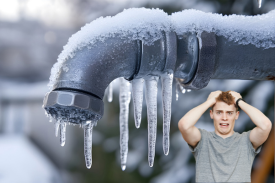
This winter’s extended stretch of low temperatures has created ideal conditions for frozen pipes and ice damming. Both issues can lead to serious and costly damage if not addressed, often becoming apparent only after water has already entered the home.
Whether you’re facing an immediate cold snap or planning ahead, these steps will help keep your plumbing safe.
Immediate Steps for This Weekend
If temperatures are dropping soon, take these actions right away:
- Keep Heat On and Steady
Set your thermostat no lower than 55°F throughout the house. Avoid deep night-time setbacks during the cold snap. Consistent heat is far safer for pipes than letting the house cool down overnight.
- Open Cabinet Doors
Open cabinet doors under kitchen and bathroom sinks on exterior walls. This allows warm indoor air to circulate around plumbing that’s normally trapped in cold spaces.
- Let Faucets Drip
For pipes on exterior walls, in garages, unheated basements, or known problem areas, run a slow cold-water trickle, especially overnight and on the windward side of the house. Moving water is much less likely to freeze.
- Close Garage and Foundation Openings
Keep the garage door closed and make sure any access doors to crawl spaces or basements are shut tightly to prevent cold air from pouring in.
- Know Your Main Water Shutoff
Make sure you know where your main water shutoff valve is and that you can turn it quickly. This can dramatically limit damage if a pipe bursts.
Extra Protection for Exposed or Risky Pipes
Some pipes need a little more attention, especially in older homes or during prolonged cold.
- Insulate Exposed Pipes
Use foam pipe sleeves on pipes in unheated basements, crawl spaces, attics, garages, and along exterior walls. In a pinch, towels secured with tape can provide short-term protection.
- Cover Outdoor Spigots
Install foam faucet covers on outdoor spigots, or wrap them with towels or blankets covered in plastic to block wind. If your home has an interior shutoff for exterior faucets, turn it off and drain the line.
Use Heat Safely
se UL-listed heat tape or heat cable designed for pipes, following manufacturer instructions.
As a temporary measure, you can use a space heater to warm the area—but keep it well away from combustibles and never leave it unattended.
If You’re Leaving the House
Cold weather plus an empty house increases the risk, so take extra precautions.
- Do Not Turn the Heat Off
Leave the thermostat set to at least 55°F, and higher if the home is drafty or has vulnerable plumbing.
- Have Someone Check In
Ask a neighbor or friend to stop by, confirm the heat is working, and look for any signs of leaks—especially during the coldest days.
If a Pipe Does Freeze
If you suspect a frozen pipe, act quickly but carefully.
- Shut Water Off Immediately
Turn off the main water supply before thawing. Frozen pipes can crack, and leaks often start once the ice melts.
- Thaw Gently...Never use an open flame or call a plumber if unsure
Use a hair dryer, heating pad, or warm towels on the frozen section. You can also warm the surrounding air with a space heater if it’s safe to do so. If you can’t access the frozen area, notice water damage, or suspect a leak, contact a licensed plumber right away.
Preventing frozen pipes comes down to steady heat, insulation, airflow, and quick action. Taking a few proactive steps—especially during a cold snap—can save you thousands of dollars and a lot of stress. Winter may be harsh, but with the right preparation, your plumbing doesn’t have to suffer.